

Keep It Truly Hot or Cold

by Dianna L. Santos
Using the essential oils commonly associated with the sport of Scent Work requires us to be more mindful and purposeful. Odor contamination is a very real concern. Thus, how we handle our odor kits, hides and the objects we set our hides on or within is crucially important. However, we also desire our dogs to develop a level of resilience and understanding that odor can be anywhere within a given space. It is not overly helpful if our dogs can only find their hides when they work within sterile environments. Yet, providing clarity is key to any training program.
This all seems quite contradictory.
To help this make more sense, let’s first examine Scent Work trials. By definition, a trial search is meant to be a test. Test parameters and specifications are set by the given competition venue. However, regardless of whom we are competing with, all venues recognize the importance of proper handling of hot and cold items.
This is most prominently seen in container searches. These classes will have two distinct volunteers: a hot box volunteer and a cold box volunteer. Why not save the hassle and have one single volunteer handle both types of containers? The likelihood of odor contamination and alteration of the test is far too great without having these two distinct volunteer roles.
Visualize in your mind a dog tackling a container search at a trial. As they go down the line, they inadvertently knock into several of the boxes with their nose or toes, so these boxes are now askew. Prior to the next dog running, these boxes must be righted. This is where the volunteers come into play. However, what if a volunteer fixed a hot box and then immediately fixed a cold box? This makes it entirely possible for subsequent dogs to experience a drastically altered odor picture.
“Ohhh…”
Wait, it gets worse! Imagine if the cold box contained a food distractor! Now the dog may be intensely drawn to this container for two reasons, possibly prompting the handler to call a false alert.
Is this a fair test to set? Not one bit.
“But I move containers all the time when I am training or practicing on my own. My dog does fine!”
Trials inject a level of pressure that we cannot hope to replicate in training, no matter how hard we try. This affects the performance of both our dogs and us as handlers. Every competition organization, in setting out their rules and regulations, attempts to ensure their tests are appropriate and passable by those teams who do the requisite training, practicing and skill building. Essentially, trick questions need not apply.
“Does this mean I need to be careful with how I handle my containers when training too?”
I love your thought process
Let me forewarn you though, my answer may cause you to twitch.
“No, please don’t say it…”
It depends.
“Noooooooooooooooooo!”
What we are training makes all the difference. Imagine that you have two dogs, one who has been training and trialing in Scent Work for years and another who you are planning to imprint onto target odor in your next training session. We can all agree these dogs are not in the same stage of their learning.
The more experienced dog may successfully work through “dirtier” searches, where we are swapping out hot and cold boxes without an issue. But for the more novice dog, that has absolutely no value in the target odor whatsoever, their first impression is immensely impactful!
If there is a hot box with a Birch hide within it, for instance, and a little bit of Birch oil transferred onto the other boxes, what learning is the dog potentially taking away? That Birch sometimes pays and sometimes it doesn’t. This is problematic.
“Okay, that makes sense. Be more careful with how I handle the boxes when working with a more novice dog.”
That is a great start.
We should also be mindful about how we store our boxes.
“…Umm, what?”
Our hot boxes should be stored away from our cold boxes.
Otherwise, the cold boxes will quite literally “soak up” the odor from the hot boxes, once again creating a confusing picture for the dog. We may think we are putting out a cold box, or a cold item, into our search area but in truth it stinks of Birch. That can be a problem.
Mindfully storing our hot and cold items is crucially important when it comes to anyone involved in hosting trials.
Consider where your odor kit is stored and where the hides are prepared. Is there a possibility this could contaminate your supposed “cold” containers or items? Do you have a clear and understandable process for trial staff and volunteers to follow? Do they know where the hot items and cold items go and who can handle what?
Remember, trials are tests that must be fair to all competitors. If EVERY container within a given search slightly smells like Birch, that is not a fair or appropriate test.
“But what about lingering odor, I thought my dog is supposed to be able to work through that?”
First, let’s define lingering odor so we are all talking about the same thing.
Lingering odor simply means there are odor molecules still in the air or area after a hide has been removed. An analogy that always resonates with me is cooking bacon. As we cook bacon, the smell of bacon can fill up the house. This smell can linger long after we have finished cooking and cleaned up. Can we eat bacon by chomping through the air? No.
With this understanding, should we expect our dogs to work through lingering odor?
If a dog has been solidly imprinted onto odor and displays a level of odor recognition and understanding, the answer could be yes.
However, for this expectation to be a successful one, it requires more patience from us.
For instance, let’s say you are training. You set out a single Anise hide for your dog to find. They successfully locate and source this hide. You reward them and then put them back up into their staging area or crate. Now you move the hide to a new spot in the same search area, collect your dog and ask them to search again. More likely than not, your dog will return to where the hide was previously set. Why?
Our dogs are smart. They just had a successful find in this location, why wouldn’t they check it again? Additionally, there are likely some lingering Anise odor molecules in this area drawing the dog in. Our dogs must now determine the difference between lingering Anise odor molecules and true source.
Here is where we come into play: our task in this moment is to breathe, smile and wait the dog out. Grant them the time to determine the hide is no longer here and that they must move on to find where the hide has been moved to. This is an essential learning moment for our dogs, not something to be rushed or interfered with. When they successfully find the hide in the new location, step in and reward them HEAVILY. Our dog just solved the puzzle exactly the way we had hoped!
However, the fact that an experienced dog can be expected to work through lingering odor doesn’t mean we should then expect them to work through odor contamination otherwise known as residual odor. Lingering odor and residual odor are not the same.
If I were to smear a scented cotton swab directly onto the front of a chair, it is unfair to expect the dog to leave that alone.
Being sloppy or absent minded with how we handle, load or store our odor, odor vessels and hides can result in residual odor, or the direct transfer of essential oil to the environment itself. This can be immensely confusing for a novice dog, “I found the best source ever, pay me!” but is just as unfair for the most experienced dog.
"Hang on a minute, I heard that we are training the dog to only pay attention to source, which is essential oil + cotton swab + odor vessel!”
You are correct.
But I have question for you: why purposefully pose a trick question for the dog?
Why not spend our time and energy ensuring we practice good odor hygiene and handling practices that will not only benefit our dogs but anyone else who plays the sniffing game? Because if we are sloppy with how we handle, store and set our hides, and we follow the advice of “searching everywhere” by tackling countless field trip searches, this can cause a world of hurt for other teams who decide to search in that very same area.
Imagine tackling a field trip location you have been eyeing for a while. You set a few hides and run your dog. They find two of your three hides but then confidently and happily alert somewhere else entirely. Remember: we as humans cannot-see-odor. Unbeknownst to you, this location was tackled by another team earlier in the week who did not practice good odor handling practices. Or, worse still, they thought it was a good idea to put essential oil directly into the environment itself. Now your dog is alerting on the purest form of Clove ever and you have no idea. Here you are now telling them, “No” and the dog is left confused, “I thought Clove paid…but here, it doesn’t pay?”
We should all agree this is unfair and not an ideal way to train our dogs.
Using essential oils demand that we practice a level of attention and care to ensure we are setting our dogs and team up for success and being fair to our fellow Scent Work aficionados.
“Fine. I have one last question for you, Santos-lady. If I am careful with how I prepare and load my odor vessels, do not use naked scented cotton swabs and all the rest, but I do set a hide onto a chair…is that chair now hot forever?”
Excellent question.
Here is my opinion, but know that you may get different responses from other instructors or trainers:
If you are working at home, the expectation that you will now pack up that chair and put into an “odor-only shed” that you built solely for storing your Scent Work hot items is unrealistic. Instead, we can wipe down the area where the hide was placed with Dawn soap and water and allow the area to air out before our next training session.
Additionally, it can be quite helpful to keep a training log or journal to track where you set hides. For the purposes of this discussion, this ensures we are watching our dog to see if the chair is giving a, “there may be odor contamination here” vibes. But more importantly, a log or journal can help keep us more honest, highlighting patterns we may have fallen into and incentivize us to branch out and try new hide placements.
But what if you are training in a group class at a training facility that hosts several Scent Work classes a week? In this scenario, it may behoove the instructor to have segregated “hot” chairs and “cold” chairs. The mere volume of searches and dogs working may necessitate a different approach than when you are simply training alone. Especially if newer teams are being trained, having the picture be clearer for these novice dogs can be incredibly helpful.
When discussing clubs, groups or individuals who host trials, they absolutely must segregate their hot and cold items no matter what they are. Care must be taken to ensure all hot and cold items are handled appropriately and stored separately. Being lackadaisical about this once again will affect the efficacy and appropriateness of the trial as a test. Dogs will be faced with unfair searches, competitors will be unhappy and the entry numbers will plummet.
It may not seem as though considering hot and cold items in Scent Work should be at the top of your list of priorities, but I hope this article gave you a moment to pause and reconsider. Having our dogs go out and find an odor that is entirely meaningless to them without training is super snazzy and exciting for us. But with it comes a level of responsibility that we should not ignore or shy away from.
Keep the game fun and effective by being more mindful of what is hot and what is cold when playing the game of Scent Work.
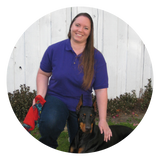
Dianna has been training dogs professionally since 2011. She has done everything from teaching group training classes and private lessons, to specializing in working with fearful, reactive and aggressive dogs, to being a trial official and competition organization staff member.
Following a serious neck and back injury, Dianna was forced to retire from in-person dog training. But she was not ready to give up her passion! So, she created Pet Dog U and Scent Work University to provide outstanding online dog training to as many dog handlers, owners and trainers possible…regardless of where they live! Dianna is incredibly grateful to the amazingly talented group of instructors who have joined PDU and SWU and she looks forward to the continued growth of PDU and SWU and increased learning opportunities all of these online dog training platforms can provide.
In June 2021, Dianna and her business partner, Sean McMurray launched Cyber Scent Work, an organization that operates in the gray space between training and trialing in Scent Work. With Cyber Scent Work, handlers have the opportunity to earn Qs, titles and ribbons while also receiving helpful training advice regardless of whether they qualify or not! The advent of the Cyber Sniffing Games, Traditional Cyber Scent Work Program, in-person and online assessments have been met with much fanfare! Be sure to check out Cyber Scent Work, you will be happy you did!


